HORMONE THERAPY
A hormone is a chemical produced by a gland in the body to activate cells or tissues.
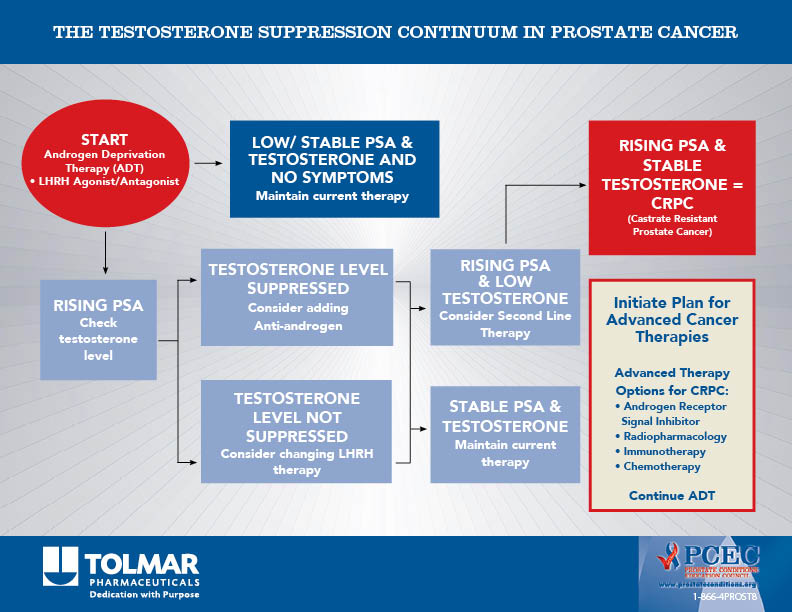
Hormone therapy is a form of treatment that adds, removes, or blocks hormones. Hormones produced by men are androgens. The male hormone testosterone is the main fuel for prostate cancer cell growth, which makes it a common target for therapeutic intervention. Hormone therapy is also referred to as androgen deprivation therapy (ADT) because testosterone is a type of androgen. The goal of ADT is to deprive cancer cells of the testosterone they use to grow. This can be accomplished by reducing testosterone levels or by preventing the actions of testosterone. ADT often slows tumor growth and may shrink prostate tumors.
Hormonal therapy can be used before radiation therapy or surgery to shrink the prostate cancer tumor, in conjunction with radiation as an initial treatment (usually for localized cancer with higher patient risk), and in cases of recurrent disease and advanced stages of the cancer.
Treatments that reduce testosterone levels:
Orchiectomy (surgical castration):
As the testicles are responsible for producing the majority of testosterone, having one or both testicles surgically removed, known as orchiectomy, leads to significantly reduced testosterone levels in the body. It is considered hormone therapy as the primary source of testosterone is removed- the testicles.
Luteinizing hormone-releasing hormone (LHRH) agonist:
LHRH agonists shut down testosterone production by the testicles. LHRH agonists can reduce testosterone production to castration levels and are mostly injections or implanted under the skin. They may be administered monthly, bi-annually, or quarterly. Below is a list of some LHRH therapies:
- Lupron Depot (Leuprolide)
- Eligard (Leuprolide)
- Zoladex (Goserelin)
- Trelstar (Triptorelin)
LHRH antagonists:
LHRH antagonists also shut down testosterone production by the testicles. This is achieved by stopping the pituitary gland from making LHRH. Like LHRH agonists, LHRH antagonists can reduce testosterone production to castration levels. LHRH antagonists may be given as monthly injections or taken as pills once daily and are often used to treat advanced prostate cancer. Below is a list of LHRH antagonist therapies:
- Firmagon (Degarelix)
- Orgovyx (relugolix)
Androgen Synthesis Inhibitors:
Small amounts of testosterone are produced outside of the testicles. For example, testosterone can be made by the adrenal gland and is sometimes even made by the prostate cancer cells themselves. Androgen synthesis inhibitors can block the production of androgens, like testosterone, from being made throughout the body. These drugs can interfere with the production of other hormones and therefore are often prescribed with a corticosteroid such as prednisone. Below is a list of androgen synthesis inhibitor therapies:
- Zytiga (Abiraterone)
- Nizoral (Ketoconazole)
Treatments that block actions of testosterone:
Androgen Receptor Inhibitors:
Androgens work by binding to a protein called an androgen receptor. Androgen receptor inhibitor therapies block this receptor from functioning, which prevents androgens from promoting the growth and survival of prostate cancer cells as testosterone is not received by the cells. These drugs are typically taken daily as pills and are often taken alongside another form of ADT. Below is a list of androgen receptor inhibitor therapies:
- Erleada (Apalutamide)
- Nubeqa (Darolutamide)
- Eulexin (Flutamide)
- Casodex (Bicalutamide)
- Nilutamide (Nilandron)
- Xtandi (Enzalutamide)
The effectiveness of hormone therapy can be reduced over time in advanced prostate cancer. This can happen when the cancer cells learn to grow without testosterone. This is called hormone-resistant prostate cancer (also called castration-resistant prostate cancer). However, the cancer is still treatable with other classes or types of agents.
Side Effects:
Many factors contribute to the risk of side effects from hormone therapy, including age, fitness level, and duration of treatment. Moreover, many side effects of hormone therapy can be prevented or treated. Some effects of hormone therapy are:
- Reduced or absent sexual desire
- Erectile dysfunction
- Osteoporosis
- Bone fractures
- Loss of muscle mass
- Weight gain
- Heart diseases
- Diabetes
- Breast tenderness and growth of breast tissue
- Fatigue
- Mood changes
- Hot flashes
- Shrinkage of testicles and penis
- Depression