
ENLARGED PROSTATE / BPH
Benign Prostatic Hyperplasia (BPH)
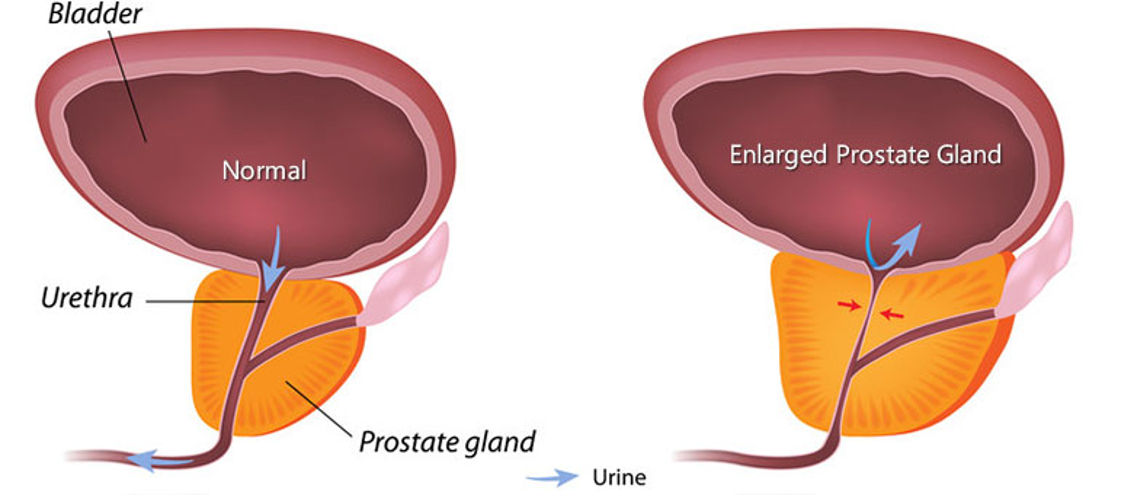
Benign Prostatic Hyperplasia (BPH) is a noncancerous growth of the prostate gland that often occurs as men age. It is especially common in men over age 60. As the prostate gets larger, it can press against the urethra (the tube that carries urine out of the body), causing urinary symptoms.
Not all men with an enlarged prostate have symptoms. Some men have a large prostate but no issues, while others with only a small enlargement may have bothersome symptoms. These may include:
- Difficulty starting or stopping urination
- Weak urine stream
- Frequent urination, especially at night
- Feeling like the bladder is not completely empty
Doctors believe BPH is related to age-related changes in hormones, particularly an increase in dihydrotestosterone (DHT), a hormone made from testosterone.
BPH Treatment Options
Watchful Waiting
If symptoms are mild or not bothersome, doctors may suggest a “watchful waiting” approach. This means having regular checkups but no immediate treatment. Symptoms can change over time and sometimes improve on their own.
Medication Options
There are two main types of medications used to treat BPH:
Alpha-blockers: These relax the muscles of the prostate and bladder neck to improve urine flow. They work quickly but do not shrink the prostate. Common medications include:
- Tamsulosin
- Terazosin
- Doxazosin
5-alpha reductase inhibitors: These shrink the prostate over time by lowering DHT levels. They may take several months to work. Examples include:
- Finasteride
- Dutasteride
Side effects can include dizziness, lower blood pressure, and sexual side effects. Your doctor will help determine which option is best for you.
Minimally Invasive Procedures
If medications do not help or are not preferred, there are newer treatments that relieve symptoms with faster recovery than traditional surgery:
UroLift®: Small implants hold the prostate tissue away from the urethra to improve flow.
Rezum™: Steam therapy is used to destroy excess prostate tissue.
Aquablation®: Uses high-pressure water jets under robotic guidance to remove tissue.
Prostate Artery Embolization (PAE): A radiology-guided procedure that shrinks the prostate by reducing blood flow to it.
Holmium Laser Enucleation of the Prostate (HoLEP): A minimally invasive surgical procedure that uses a holmium laser to remove obstructive prostate tissue.
These are typically outpatient treatments and may be good options for men who want to avoid long-term medications or surgical procedures such as TURP.
Surgical Options
For some men with moderate to severe symptoms, surgery may be needed:
TURP (Transurethral Resection of the Prostate): A device is inserted through the urethra to remove prostate tissue. It is the most common surgery for BPH. Most men recover well, but some may experience changes in ejaculation.
TUIP (Transurethral Incision of the Prostate): Small cuts are made in the prostate to ease pressure. It is usually used in men with smaller prostates. Recovery is usually quick.
Open/Robotic Partial Prostatectomy: For very large prostates, an incision in the lower abdomen may be needed to remove part of the prostate. This procedure has a longer recovery time but can be very effective.
All surgeries carry some risks, including infection, bleeding, and changes in sexual or urinary function.
Supplements
Some men try supplements like saw palmetto for BPH symptoms. However, research shows mixed results, and these treatments may not work for everyone. Always talk to your doctor before starting any supplement.
Summary
BPH is common and treatable. Treatment depends on how much the symptoms affect your daily life. Many men start by completing the International Prostate Symptom Score (IPSS) questionnaire, a standard tool used to measure urinary symptoms and guide treatment decisions. Options range from regular monitoring to medications, office-based procedures, or surgery. Talk to your doctor or a patient navigator to decide what’s right for you.